
Choosing Eye Lag Screws in 2026 requires more than matching diameter and length. A reliable selection begins with the connection itself: wood species, grain direction, expected load, moisture exposure, and installation access. The USDA Forest Products Laboratory’s Wood Handbook explains that fastener withdrawal resistance changes with wood density, penetration depth, and loading direction. These factors can make a short screw appear suitable while performing poorly in service.
Use tested information, not attractive packaging. The American Wood Protection Association’s standards help identify preservative-treated wood and compatible corrosion protection. ASTM A153 covers hot-dip galvanized coatings, while ASTM F2329 addresses zinc coating requirements for carbon-steel fasteners. Stainless steel may be preferable near saltwater, but grade selection still matters. A2 and A4 are not interchangeable in every environment. Check the manufacturer’s technical sheet for thread diameter, eye dimensions, tensile strength, recommended pilot-hole size, and allowable working load. Published values should identify the wood species and test conditions.
A practical inspection is essential. The lag portion should enter solid wood, not only cladding or a thin board. The eye should align with the force instead of twisting under load. Avoid hammering the screw into an undersized hole. That shortcut can split timber or damage the threads. The National Design Specification for Wood Construction also reinforces the importance of correct penetration and load direction in wood connections. Still, a catalogue rating is not a site guarantee. I may be missing a hidden variable, such as internal decay or repeated vibration. That uncertainty deserves attention. In 2026, the safest choice combines verified standards, realistic service conditions, and careful installation records.
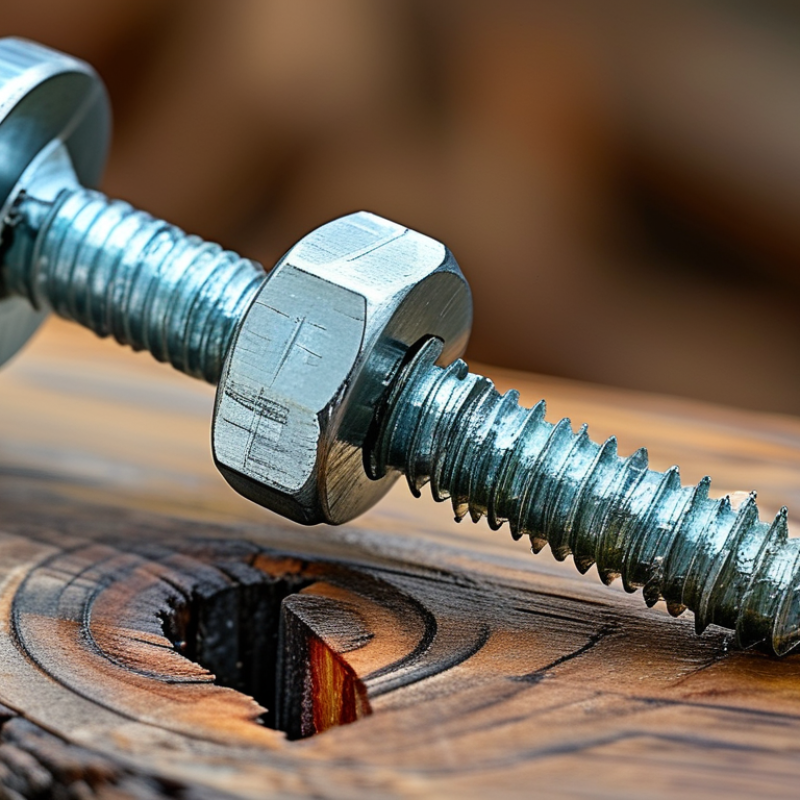
Eye lag screws are wood fasteners with a closed eye and a threaded lag shank. Unlike a simple hook, the closed eye helps retain cables, chains, and ropes. The threaded section bites into timber and transfers pulling force through the wood fibers. That is the basic working principle.
Installation matters greatly. Drill a pilot hole before turning the screw into dense wood. The hole should match the manufacturer’s specified diameter and depth. A pilot hole that is too small may split the timber. Too large, and the threads may lose grip. Keep the screw aligned with the expected load. A practical inspection should check cracks, loose fibers, and visible bending around the eye.
The screw’s strength depends on more than its metal rating. Wood species, moisture, grain direction, embedment depth, and edge distance all affect performance. Pulling along the shank is usually different from sideways loading. Avoid using an unverified eye lag screw for overhead lifting or personal safety. Those applications require purpose-rated hardware and engineered connections. In 2026, compare thread dimensions, corrosion resistance, tested load data, and applicable standards before choosing. Stainless steel can suit damp areas, but it may not solve every corrosion problem. I sometimes see users focus only on diameter. That is an understandable mistake. The surrounding timber may fail first. Even a strong screw needs sound wood.
: Match thread length and diameter to the wood condition and expected load. Softwood often needs longer threads and a correctly sized pilot hole. Hardwood may need a larger pilot hole. A thicker screw is not automatically safer. Short threads can pull out.
The pilot hole should support clean thread engagement without splitting the timber. Softwood and hardwood need different approaches. Check the screw’s installation guidance. Do not guess from appearance alone. Guessing can damage the fibers.
A hanging planter creates a mostly steady pulling force. A gate cable may create vibration, shock, and repeated loading. Use a conservative working-load limit for moving loads. Include angle effects and sudden force. Static is not always gentle.
Check steel grade, thread diameter, shank length, coating, and test records. Confirm the working-load limit and proof-load method. A clean surface does not prove strength. A “stainless” label alone gives limited evidence. Ask for dated documents.
Not necessarily. Decorative hardware may lack verified load data. Load-rated lifting hardware requires suitable design and testing. Do not use appearance as a safety measure. The large eye may still hide a weak connection.
Drill straight into sound timber. Keep the eye aligned with the pulling force. Avoid cracked, rotten, or badly damaged wood. Tighten until seated, but do not crush the fibers. That mistake is easy to miss.
Yes. Near edges, end grain, or split areas, pull-out resistance can decrease. Moisture and seasonal movement may also reduce reliability. Record the actual substrate and inspect the threads. Laboratory values may not match a damp jobsite. Real wood behaves unevenly.
Use qualified review for overhead, repeated-load, or safety-critical applications. The review should cover fastener grade, load calculations, and supporting structure. For masonry or concrete, use a tested anchoring system instead. I would not trust catalog values alone. Field conditions matter.
Choosing the right Eye Lag Screws in 2026 requires more than selecting a convenient size. These fasteners combine a threaded lag section with an eye-shaped head, allowing them to anchor into wood or suitable structural materials while providing a point for cables, ropes, or hardware connections. The best choice depends on the application, including the expected load, installation environment, base material, and exposure to moisture or corrosion. Material selection, screw diameter, length, eye shape, thread profile, and embedment depth should all match the project’s requirements.
Buyers should also review applicable technical standards, working-load recommendations, corrosion resistance, and appropriate safety factors rather than relying only on nominal strength. During installation, pilot-hole size, alignment, tightening force, and edge distance are essential for preventing splitting, bending, or pullout. Regular inspections should check for rust, deformation, loosening, and damage around the mounting point. By evaluating design, load, conditions, standards, installation, and maintenance together, users can achieve a safer and more reliable Eye Lag Screws solution.
